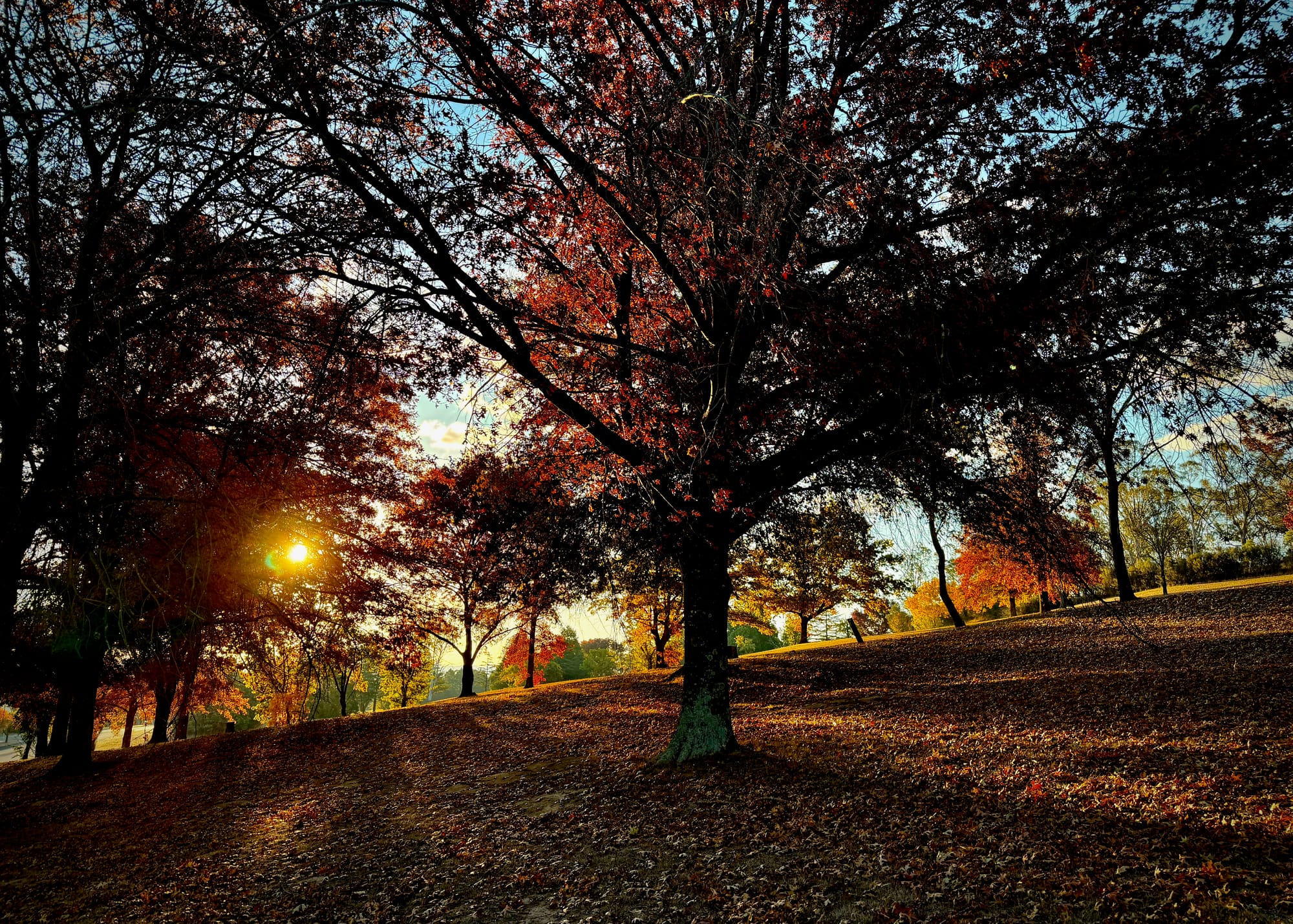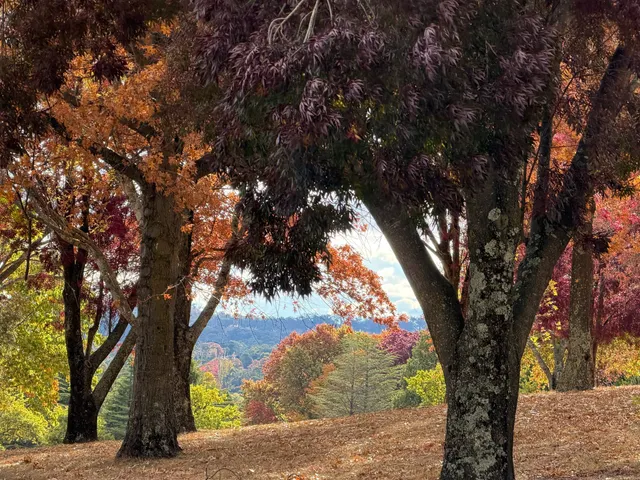
And red, and yellow, and ....
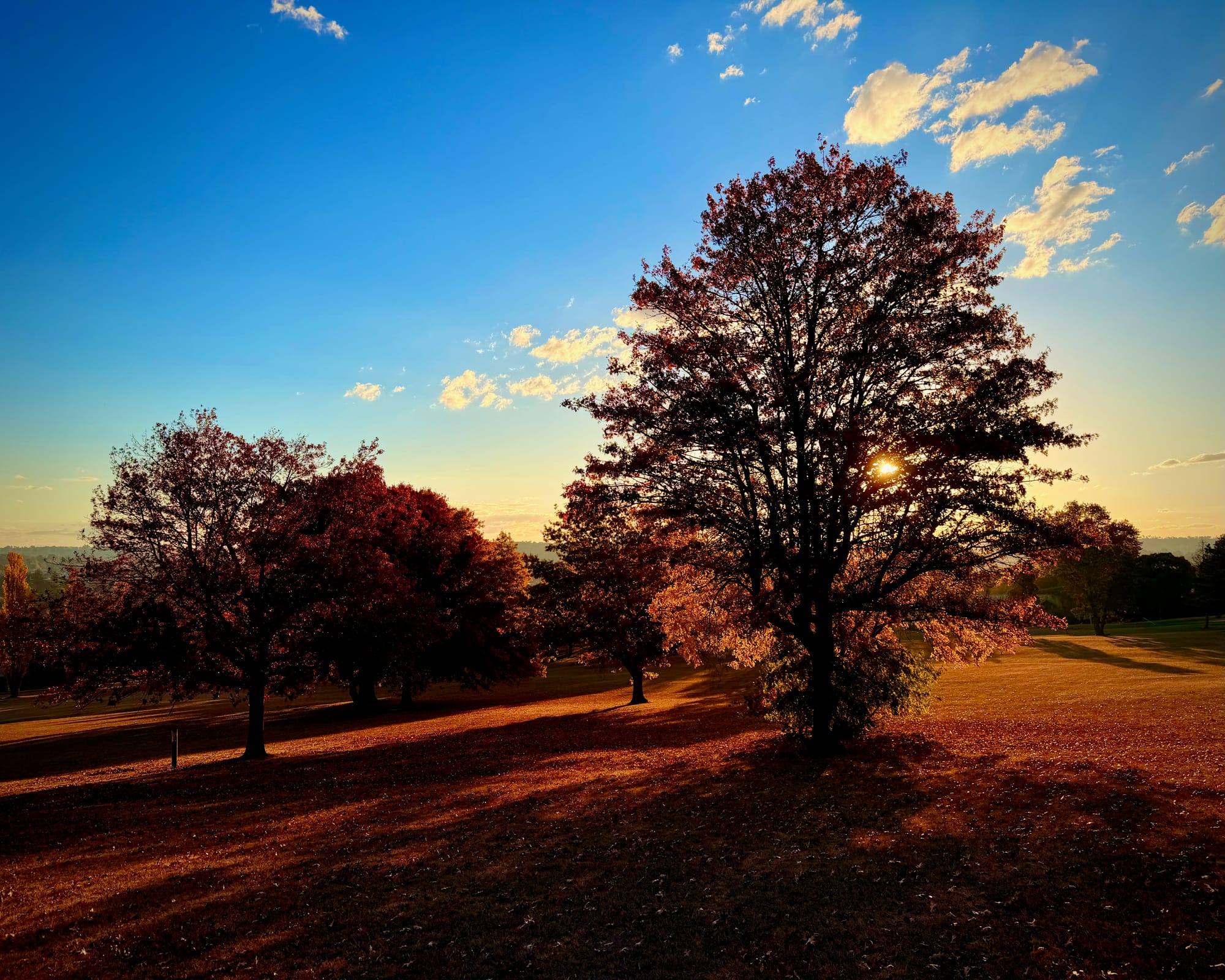
Growing up in Brisbane I became accustomed to the annual change of seasons. There was the long, hot season, followed by the oh-my-god-it's-less-than-20-degrees season we suffered through for a couple of weeks each Winter (aka "Ekka Weather").
Apart from the occasional flowering of the Jacarandas, there was little to indicate that other parts of the world might actually experience the four seasons we'd been taught about in school.
Moving to the New England introduced me to a world where the four seasons are easily distinguishable, not only by a change in the weather, but also by noticeable changes in the landscape.
Summers are as green and hot as Brisbane but without the stifling humidity, while Winters are grey and very cold with the occasional snowfall.
Spring growth heralds the ending of the long, cold winter, and the rebirth of trees that have been dormant for months.
And then there's Autumn.
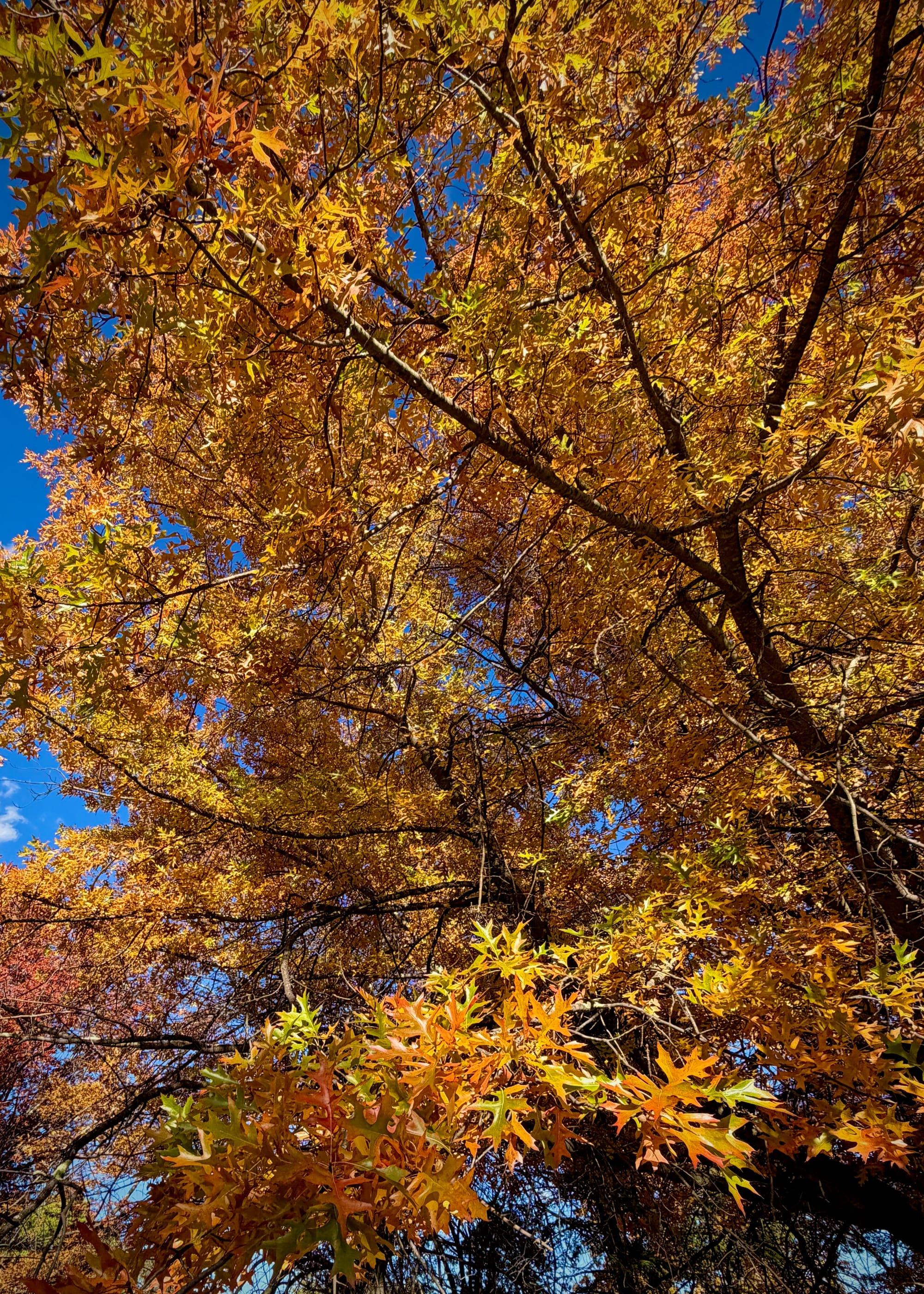
Perhaps more than any other season, Autumn highlights the change of season in a spectacular way, transforming the landscape into a riot of browns, golds, yellows, oranges and reds.
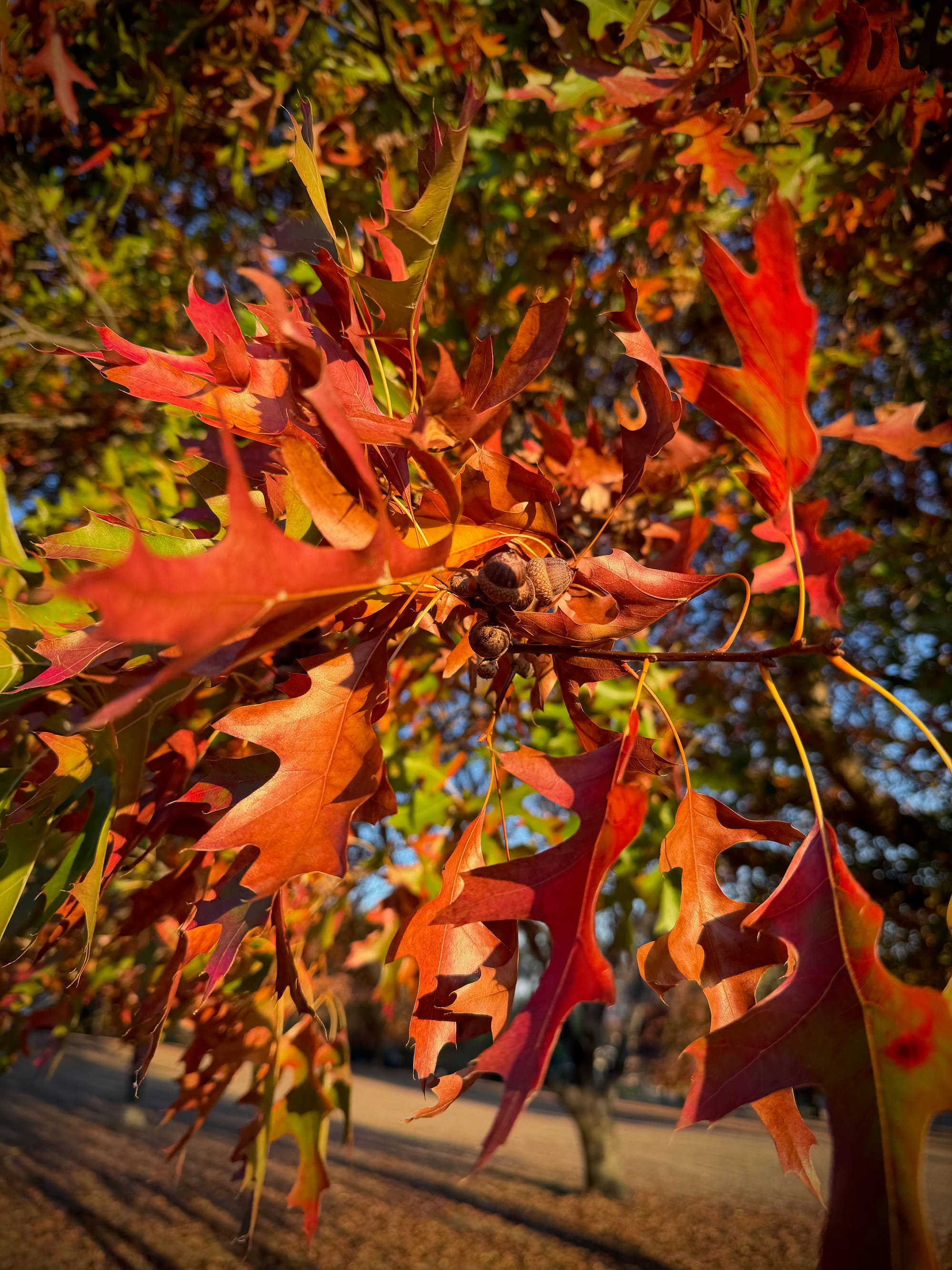
While Australia has a few deciduous trees, most of the deciduous trees in the New England are introduced species, planted by European settlers to remind themselves of their former homes. These transplanted trees and their distinctive leaves make it feel like you're in a different country, especially when seen against the English style buildings made of brick and stone.
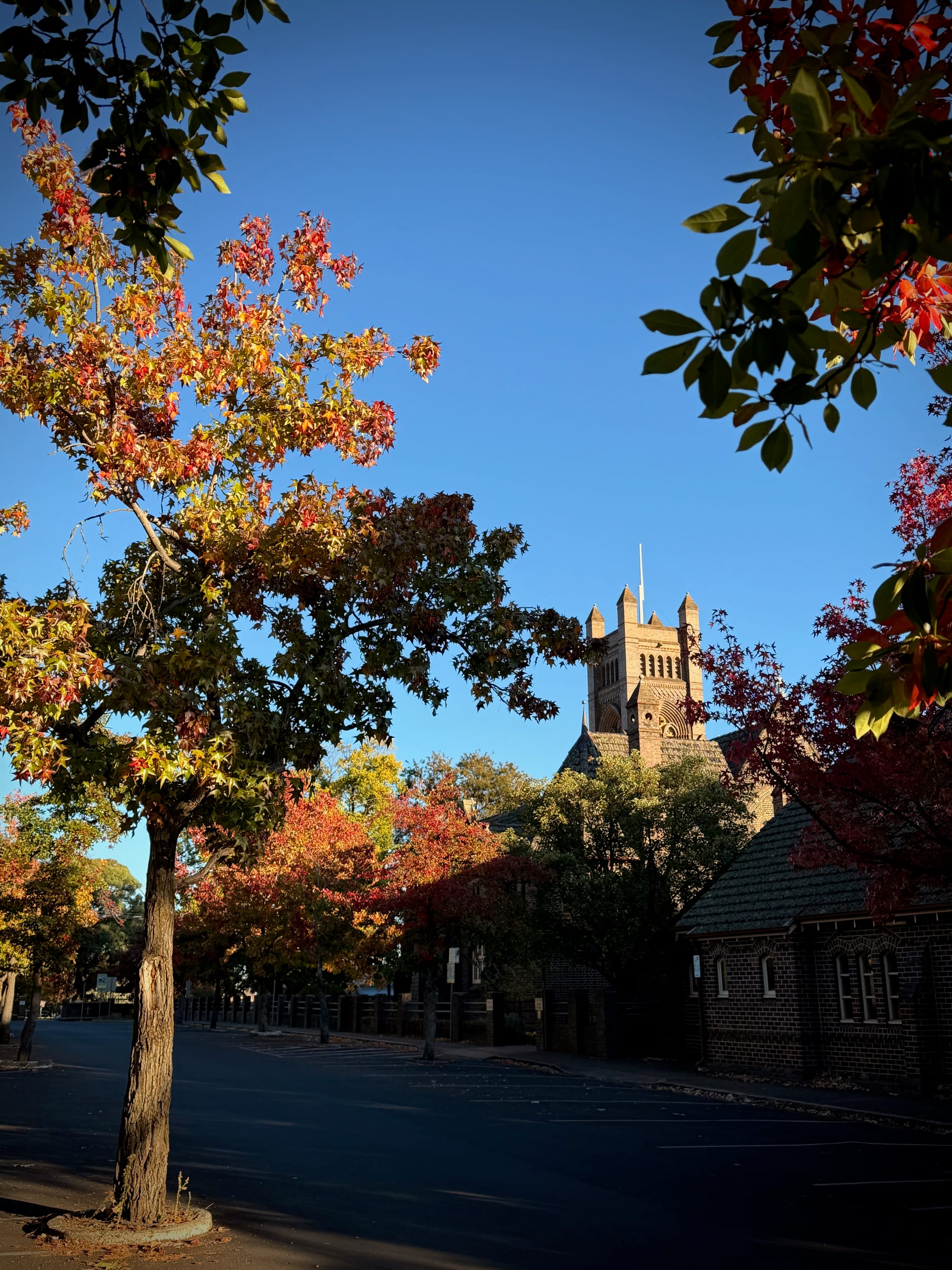
Perhaps it's this reason why many of the largest festivals happen during the Autumn months. People who live on the coast can come to the New England on a day trip and experience a massive change in scenery and temperature, without having to travel far from their homes.
And it's also why local shops carry winter clothing all year. So those who aren't prepared for the difference can buy the warm clothes they forget to pack.
Autumn in New England. It's a truly wonderful time of year.